From bilateral agreements to asymmetric interdependence
When the Inventory was created, much of the literature on migration externalisation tended to portray cooperation with non-EU countries primarily as a projection of European regulatory, financial and normative power.
My research challenged this predominantly one-directional understanding of externalisation by examining how cooperation on readmission is negotiated, selective and embedded in asymmetric interdependence.
In Informalising Readmission Agreements in the EU Neighbourhood (2007), I showed how non-EU states could strategically leverage their cooperation in migration management in pursuit of broader political and economic objectives. This research led to the formulation of the concept of “reverse conditionalities”: the capacity of formally weaker states to influence the conditions under which they accept cooperation. This perspective was subsequently developed in the edited volume Unbalanced Reciprocities: Cooperation on Readmission in the Euro-Mediterranean Area (2010), which examined the negotiated asymmetries underlying cooperation on readmission.
The Inventory’s distinction between standard and non-standard instruments emerged from this broader analytical concern. A focus exclusively on formal readmission agreements would obscure precisely those forms of negotiated cooperation through which states accommodate changing interests and contingencies.
The rationale for the inventory is to show that a whole readmission system exists linking today more than 125 countries of destination, of transit, and of origin. The animation below illustrates the extraordinary expansion of the EU readmission system, since the early 1990s to date (August 2026). This system mobilizes highly diverse countries whether these are poor or rich, large or small, conflict-ridden or not, democratically organized or authoritarian. This is a powerfully inclusive system.
The darker the colour the more engaged the country in the EU readmission system.
From informalisation to the political uses of readmission
Over the years, my research increasingly shifted from asking how readmission cooperation is institutionalised to asking what political functions these institutional configurations can perform.
Research on informalisation showed that informality should not simply be understood as a flexible technique allowing governments to circumvent parliamentary or institutional oversight. Informalisation can also provide the flexibility necessary to accommodate the demands of empowered third countries when patterns of interdependence are gradually changing.
This argument was further developed through research on bilateral arrangements that do not necessarily fit conventional understandings of readmission agreements, including the July 2018 Memorandum of Understanding on readmission between Belgium and Tunisia.
The analytical focus consequently called for a different approach. It became necessary to examine how altered patterns of interdependence affect the uses of readmission in international interactions.
Decentring the study of readmission cooperation
This evolution also required a broader theoretical and methodological repositioning.
My research has combined fieldwork, interviews, archival research and policy analysis with insights from International Relations, law and comparative politics. The objective has been to examine migration cooperation as part of wider configurations of international relations and domestic political change. This perspective also informed research on policy transfer between the EU and its southern neighbours. In Channelled Policy Transfers: EU–Tunisia Interactions on Migration Matters (2014), I examined how the former Ben Ali regime selectively reappropriated EU migration policies and used them to reinforce domestic authoritarian control, rather than simply adopting European policies as externally prescribed models.
The broader implication was that migration cooperation cannot be understood exclusively as a process through which European states project their preferences outward. Cooperation can also become a site in which non-EU governments selectively appropriate, reshape and repurpose externally generated instruments.
This concern with decentring migration studies has continued through subsequent work on borders, externalisation, international cooperation and knowledge production.


From an expanding system to changing interdependencies
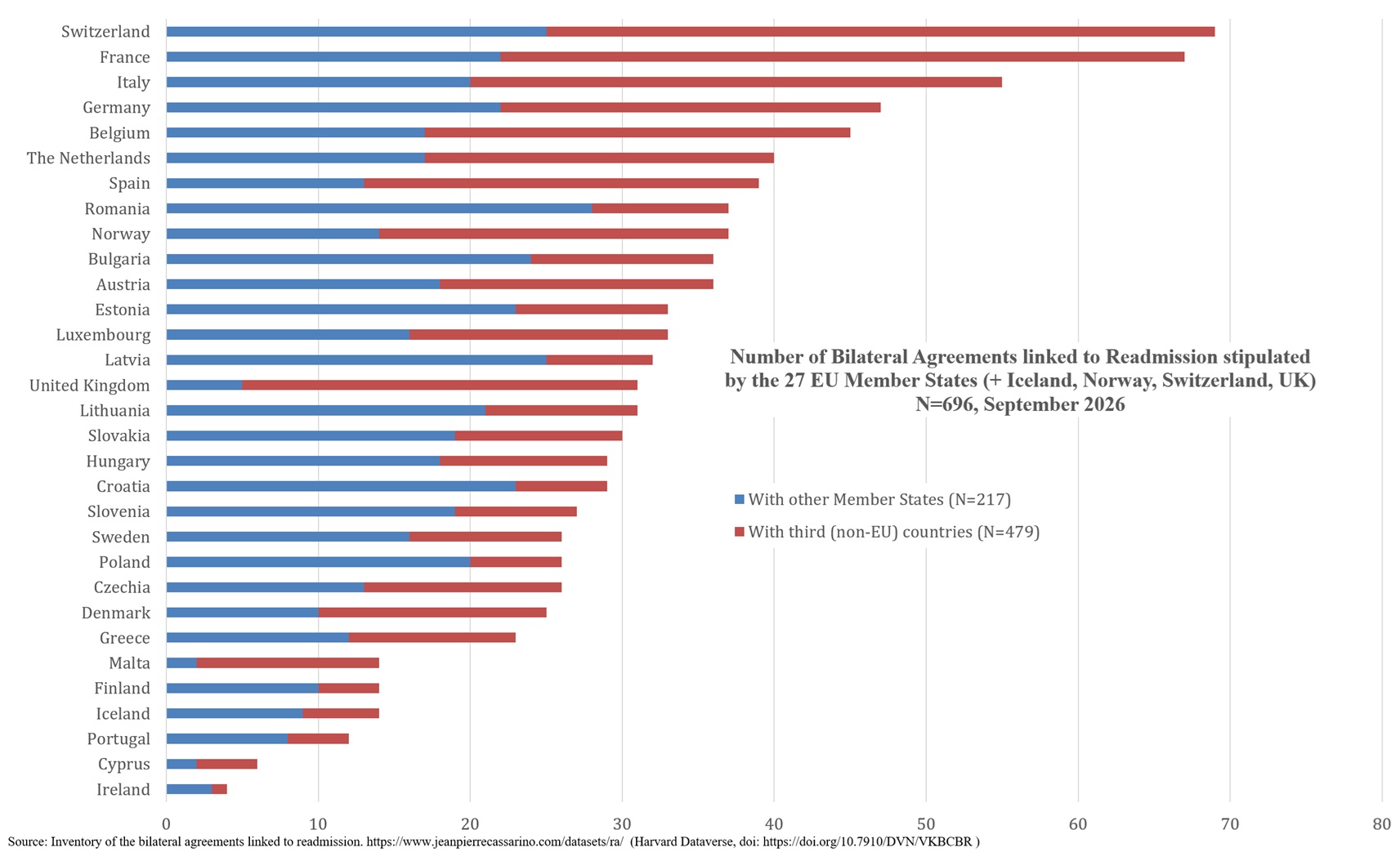
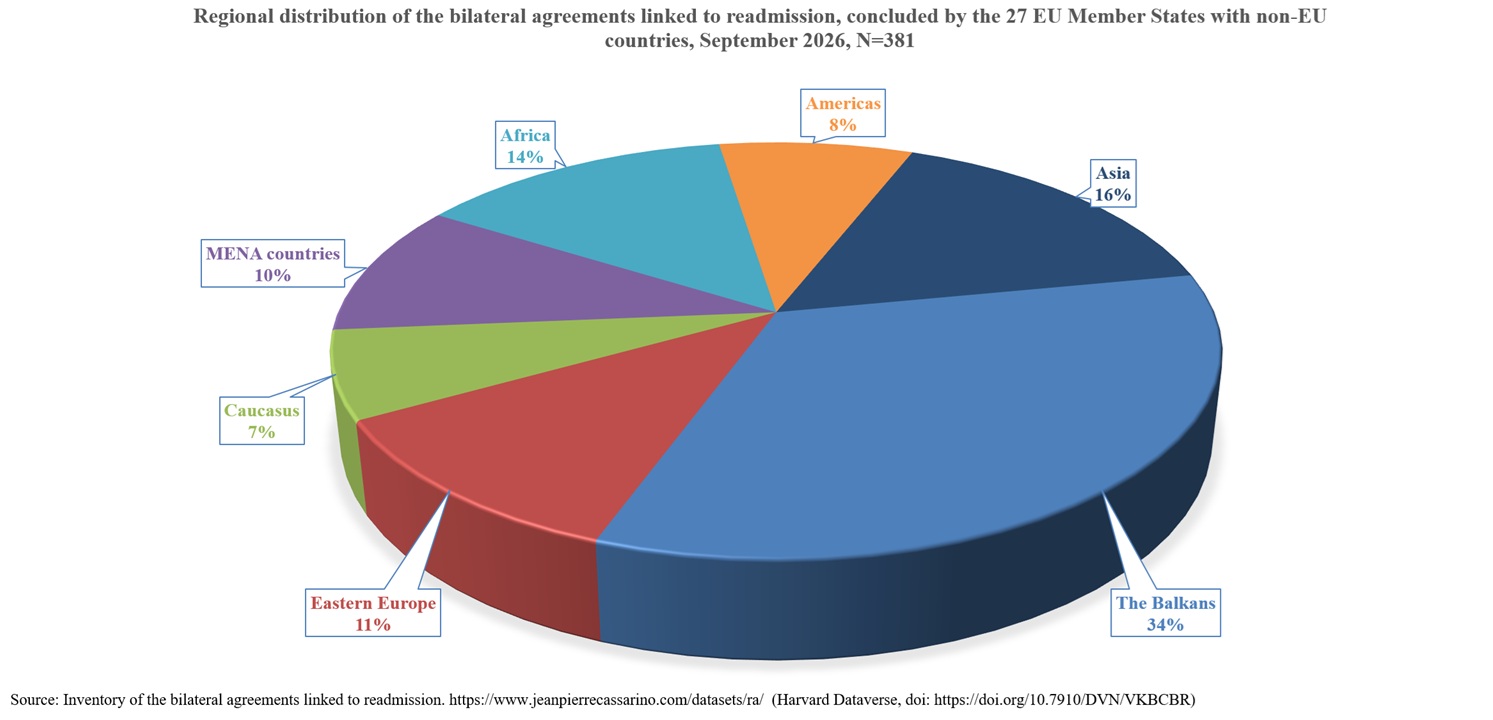
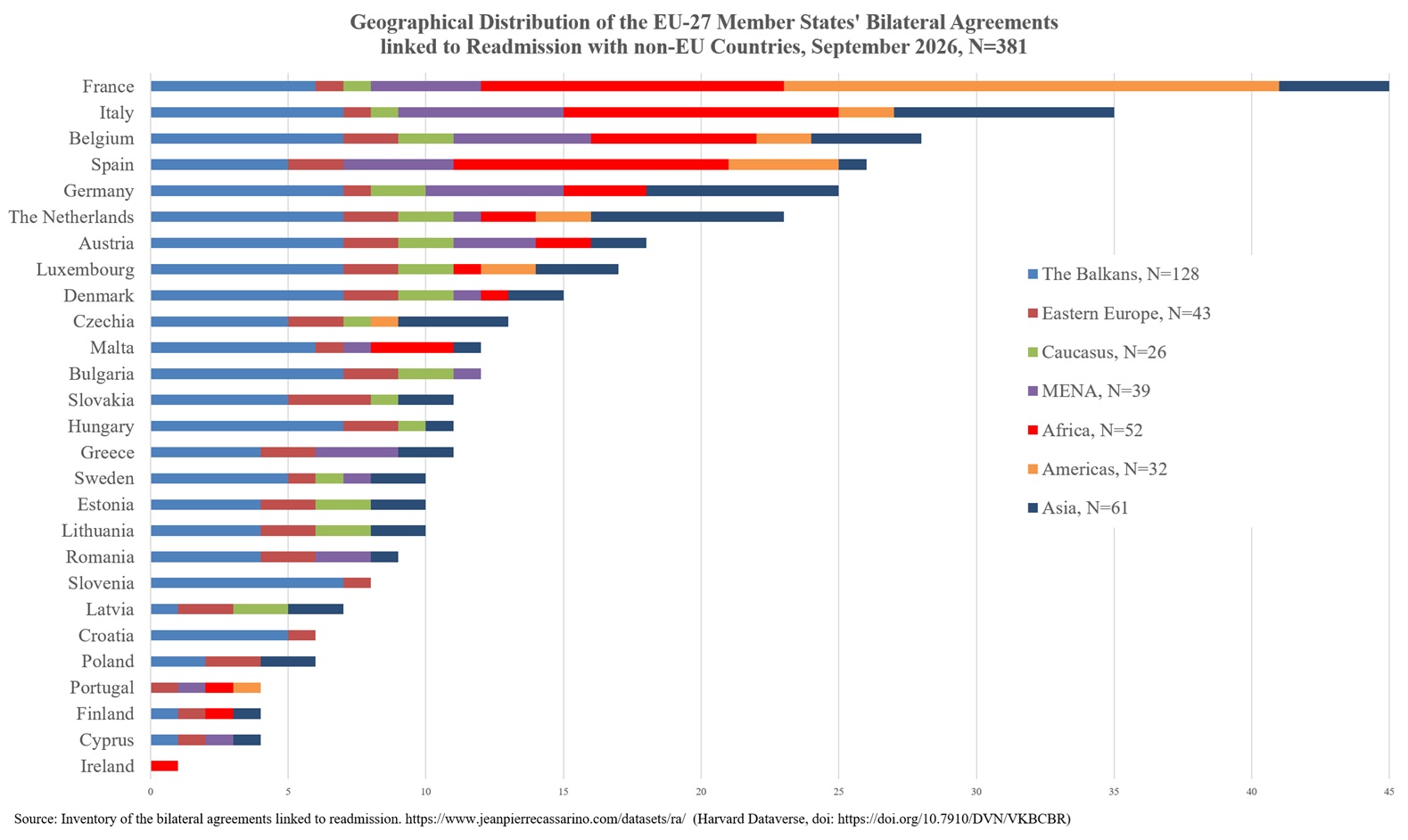
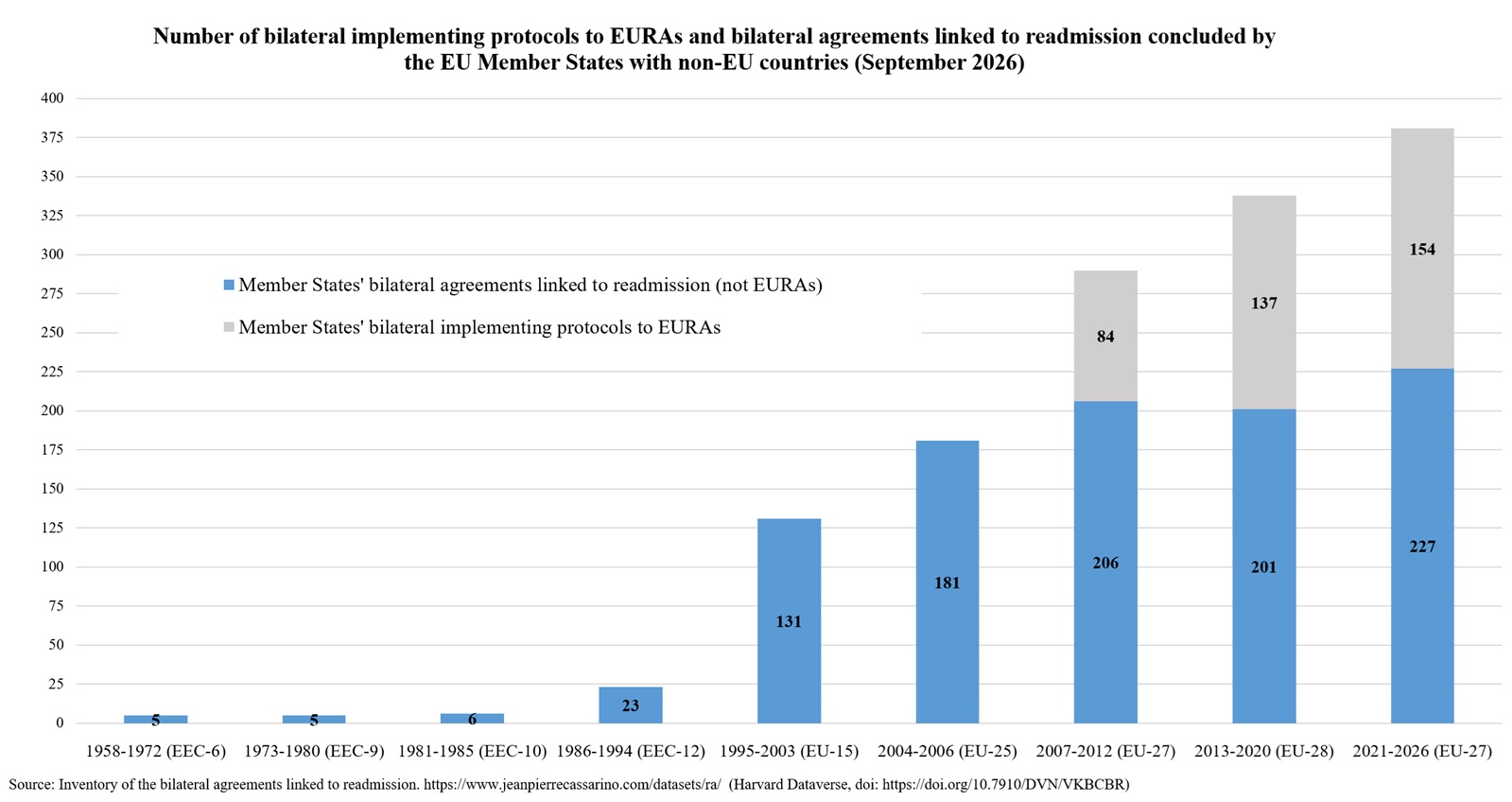
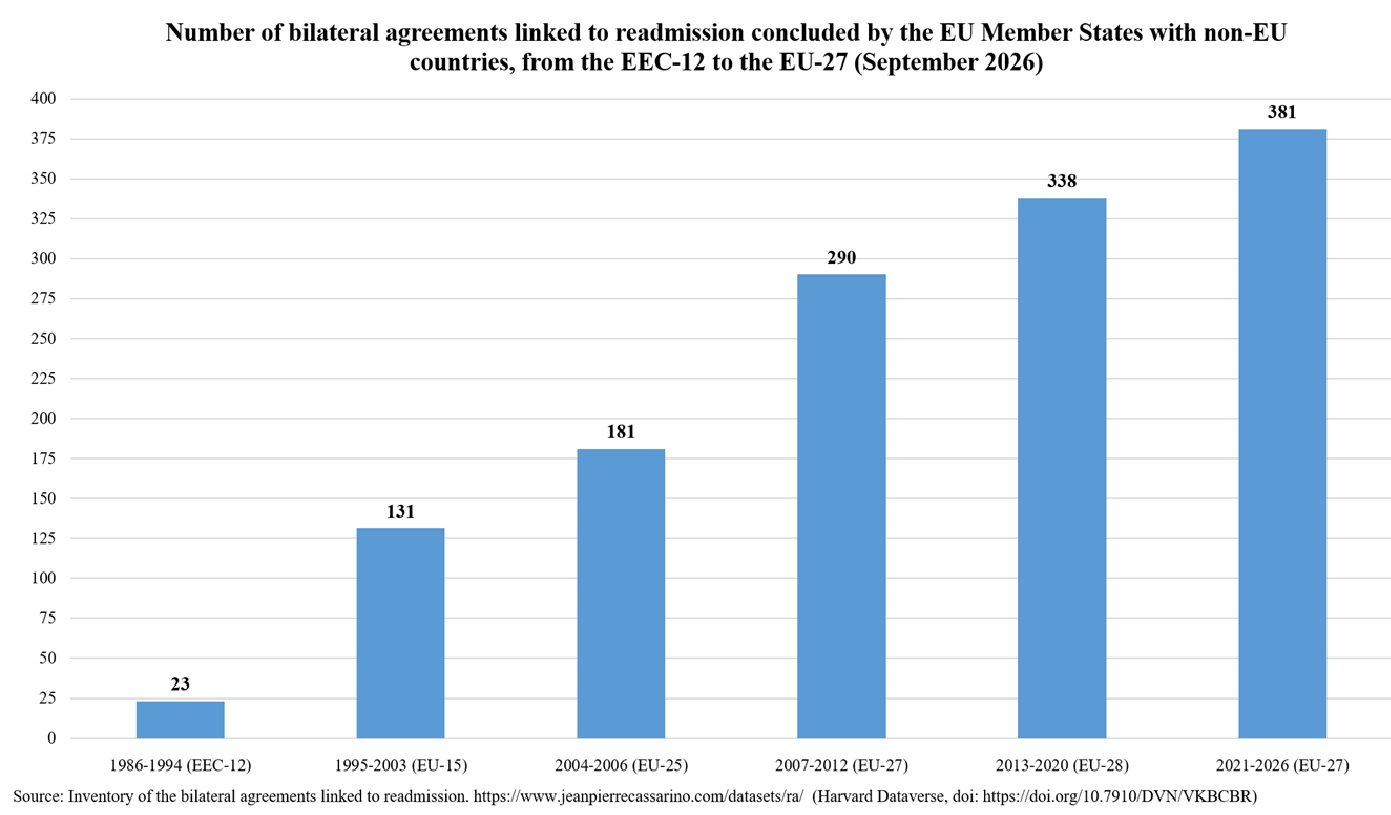
The Inventory also makes visible the extraordinary geographical expansion of the readmission system.
Today, it links more than 125 countries of destination, transit and origin. The expansion involves countries with very different political, economic and institutional characteristics. The resulting system is therefore highly diverse and cannot be reduced to a simple projection of European preferences.
Understanding this expansion requires attention not only to material incentives, costs and benefits, or to obligations derived from international law. It also requires examining the epistemic conditions that have made extensive cooperation on readmission politically thinkable and institutionally acceptable.
Predominant policy paradigms, shared schemes of understanding and the emergence of a common lexicon have contributed to the extraordinary expansion of bilateral cooperation on readmission. The Inventory is intended to provide an empirical basis for investigating these transformations.
A research resource in continuous development
The Inventory reflects almost two decades of research on the changing nature of readmission cooperation. Its evolution mirrors a broader analytical trajectory:
From agreements → to cooperation → to asymmetric interdependence → to reverse conditionalities → to informalisation → to political uses of readmission → to transgovernmental networks including their implications for protection, asylum rights, the rule of law and democratic standards.
The Inventory consequently remains both a dataset and a research instrument: a means of documenting an expanding system while also enabling questions about the political processes, asymmetries and unintended consequences that underpin it.