- About the Inventory
- Coding standard and non-standard agreements
- How to use the Inventory: Access to data
- What the Inventory makes possible
- Ethics statement and recommended citation
- Analyses
*****
About the Inventory
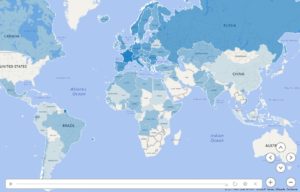 The Inventory of the Bilateral Agreements Linked to Readmission was created in 2006 to document the development of bilateral cooperation on the readmission of foreign nationals. Since then, it has evolved alongside my own research on readmission, migration cooperation and international interdependence.
The Inventory was initially conceived as a means of identifying the rapidly expanding network of bilateral agreements through which states cooperate on the readmission of foreign nationals. Over time, however, research showed that cooperation on readmission cannot be understood solely by examining formal readmission agreements. States also rely on less formalised and often less visible arrangements, embedded in broader forms of police, security, migration and administrative cooperation.
This led to the development of a dual approach, distinguishing between standard readmission agreements and a broader range of non-standard agreements and arrangements linked to readmission. The Inventory consequently seeks to capture not simply the existence of readmission agreements, but the diverse institutional configurations through which cooperation on readmission is established and operationalised.
The Inventory has therefore become more than a catalogue of agreements. It constitutes a longitudinal research resource through which the changing political and institutional configurations of readmission cooperation can be observed.
Coding standard and non-standard agreements
For many decades, cooperation on readmission has been bilaterally practised while gaining considerable momentum in both bilateral and multilateral negotiations.
Some cooperation is formalised through standard readmission agreements based on reciprocal obligations. Yet a systematic inventory of such agreements alone cannot capture the full range of mechanisms developed to facilitate the identification, documentation, transfer and readmission of foreign nationals.
States may instead incorporate readmission provisions into broader bilateral frameworks or rely on less formalised instruments and channels. These include police and security cooperation agreements, administrative arrangements, memoranda of understanding, provisional agreements and exchanges of letters.
The Inventory therefore records:
Standard agreements
- Bilateral readmission agreements, whether signed (S) or in force (V);
- Bilateral implementing protocols (IP) to EU readmission agreements (EURAs);
- Agreements concluded between the Benelux countries and third countries (AB).
Non-standard agreements and arrangements
- Police and security cooperation agreements (CP) containing provisions concerning readmission or removal;
- Conventions (C) containing such provisions;
- Memoranda of understanding (ME);
- Administrative arrangements (AA);
- Provisional agreements (PA);
- Exchanges of letters (EL).
The Inventory also identifies agreements and arrangements that are under negotiation (N), where reliable information is available.
The rationale for calling these instruments “agreements linked to readmission” is therefore deliberate: readmission cooperation extends beyond readmission treaties.
How to use the Inventory: Access to data
The Inventory contains tables listing references to a large number of bilateral agreements linked to readmission.
Users can select individual countries listed below to access the corresponding bilateral instruments. The data are available in Open Access, subject to online registration.
| EU plus Iceland, Norway, Switzerland and the United Kingdom |
|
| Austria | Latvia |
| Belgium | Lithuania |
| Bulgaria | Luxembourg |
| Croatia | Malta |
| Cyprus | Netherlands |
| Czechia | Norway |
| Denmark | Poland |
| Estonia | Portugal |
| Finland | Romania |
| France | Slovakia |
| Germany | Slovenia |
| Greece | Spain |
| Hungary | Sweden |
| Iceland | Switzerland |
| Ireland | United Kingdom |
| Italy | European Union’s readmission agreements |
| Balkans, Eastern Europe, Caucasus | |
| Albania | Montenegro |
| Armenia | North Macedonia |
| Bosnia & Herzegovina | Serbia |
| Georgia | Russia |
| Kosovo | Ukraine |
| Moldova | |
| Mediterranean countries | |
| Algeria | Tunisia |
| Libya | Turkey |
| Morocco | |
The Inventory is the product of long-standing documentary and field-based research. It also owes much to the contribution of national and international civil servants and other respondents who have provided documents, information and responses to unofficial queries. The Inventory necessarily depends on the identification and cross-checking of information from different sources. Entries should therefore be understood as documented references to international instruments, rather than as an exhaustive account of their implementation.
The Inventory is updated as new information becomes available and are verified.
What the Inventory makes possible
The Inventory can be used to investigate:
- the geographical expansion of bilateral cooperation on readmission;
- the evolution of cooperation over time;
- differences between standard and non-standard forms of cooperation;
- the relationship between bilateral and EU-level readmission cooperation;
- the proliferation of implementing and administrative arrangements;
- the ways in which readmission cooperation is embedded in broader forms of police, security and migration cooperation;
- changing patterns of interdependence between EU and non-EU states;
- and, more broadly, the political consequences of the institutionalisation and informalisation of readmission cooperation.
The Inventory is thus not intended simply to answer the question “Which countries have readmission agreements?” It is designed to make visible the wider institutional architecture through which states cooperate on readmission.
Ethics statement and recommended citation
The Inventory of the Bilateral Agreements linked to Readmission is a database as defined in Directive 96/9/EC on the legal protection of databases. In accordance with the sui generis database right, unauthorized extraction and/or re-utilization of all or substantial parts of the database are forbidden without the prior approval of the author. Please note that any unauthorized reproduction, copying or data mining is forbidden.
Recommended citation:
Cassarino, Jean-Pierre, Inventory of the Bilateral Agreements Linked to Readmission, Harvard Dataverse, DOI: https://doi.org/10.7910/DVN/VKBCBR
If you have any constructive comments or suggestions, or if you have any problem with account login, please do not hesitate to contact me.